Zero-Brine: Next Generation Water-Smart Management Systems

Water security and its related energy, environmental and economic costs are one of the greatest challenges of today’s society. Therefore, innovative water management solutions and alternative water resources are required. The EU-funded WATER-MINING project validated many innovative next-generation water resource solutions at the pre-commercial demonstration-scale in accordance with relevant legislation, such as the Water Framework Directive, Circular Economy and EU Green Deal packages. The project demonstrated different designs proposed for industrial or urban wastewater treatment and seawater desalination, and innovative service-based business models aiming to improve the engagement of private and public stakeholders. The project combined research, case studies and living labs approach and resulted in several policy ‘’packages’’. The project also developed a roadmap for implementing effective policy packages, enabling the widespread implementation of the business models that support the technological innovation connected to the case studies. The ‘’Water-mining’’ project was coordinated by the TU Delft (NL), and brought together 38 public and private partners from 12 countries across Europe. Preceding project, ‘Zero-Brine’’ was a collaboration of 22 partners from research institutes, SMEs, construction companies and end-users from 10 countries.
Impact:
The WATER-MINING project built upon the previous ZERO BRINE project, and developed innovative and sustainable technologies for: 1) desalination process; 2) techniques for extracting valuable products from urban wastewater (e.g. phosphates); 3) producing pollution-free industrial wastewater. Next to technologies it provides roadmap for implementation (‘’policy packages’’) across whole ecosystem. The insights and knowledge gained in these projects provide key inputs for the CIRSEAU, CSA cluster project, that just started. This projects supports “water-smart economy and society” by connecting 143 partners in 20+ countries. The project activities aim to identify and address the barriers harnessing the potential market implementation of circular water projects.
Prof. P. Osseweijer (TU Delft): “We plan to organize more than 24 workshops with experts, policymakers, industry, civil communities and the public to showcase the innovations and discuss their implications, such as environmental footprint, local changes and impacts."
More info: ZEROBRINE, WATER-MINING joins the CIRSEAU Cluster - watermining
Horizon 2020 - Societal Challenges: Climate action, Environment, Resource Efficiency and Raw Materials
Meer verhalen van Technische Universiteit Delft
-
SeaClear: Search, Identification and Collection of Marine Litter with Autonomous Robots
Technische Universiteit Delft
-
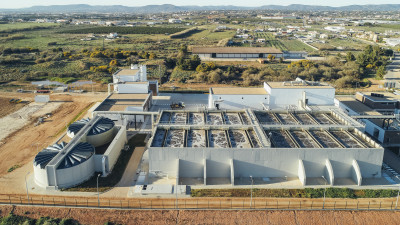
Next Generation Water-Smart Management Systems: Large Scale Demonstrations for a Circular Economy and Society
Technische Universiteit Delft
-