OpenAgri: Efficient and environmental friendly agriculture

Research conducted at Maastricht University (UM) is making significant strides in the agricultural sector through innovative software solutions aimed at improving efficiency and sustainability in farming. Led by data scientist Christopher Brewster, the OpenAgri project combines modern technology and artificial intelligence to support farmers in digitalizing their operations. This includes developing systems that detect pests and diseases through high-resolution cameras, using GPS to track livestock, and creating water-saving irrigation systems.
Impact
The goal is to make agriculture not only more efficient but also environmentally friendly. “There’s probably no sector that has a greater impact on climate change and biodiversity loss,” Brewster emphasizes, highlighting the urgency of addressing these challenges in farming. The software components being developed are designed to be modular and open-source, making digitalization more accessible for farmers and IT professionals alike. This approach enables users to build custom solutions tailored to their needs without starting from scratch.
Five pilot projects are currently underway across Europe, assessing practical applications of this technology in real farming conditions. For instance, vineyards in Greece are testing systems to automatically detect fungi, while Belgian farms use AI to analyze drone images for pest detection. By ensuring that these tools are energy-efficient and user-friendly, the aim is to encourage widespread adoption and create a supportive community around these innovations.
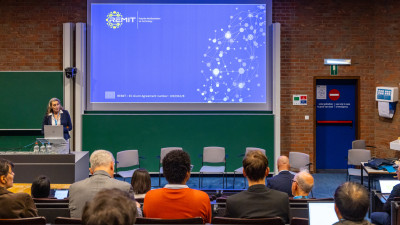
Dr. Christopher Brewster (Maastricht Univeristy): “The main goal is to make agriculture more efficient, and therefore more environmentally friendly.”
While Brewster acknowledges the potential of smart farming, he cautions against technological utopianism, stressing that evidence of significant efficiency and environmental benefits is still emerging.
More info: https://horizon-openagri.eu/