LINKS: Strengthening links between technologies and society for European disaster resilience

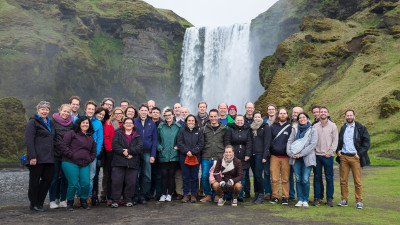
The LINKS project has concluded a 4-year study investigating how Social Media and Crowdsourcing (SMCS) can be used to bridge and strengthen disaster resilience among authorities and citizens in Europe. Working with case teams in Italy, Denmark, Germany, and the Netherlands, the project built the foundation for a LINKS community consisting of first responders, civil society organizations, decision makers, citizens, and researchers, from diverse communities with a common goal of improving risk and crisis communication practices.
Nathan Clark, Associate Prof., VU Amsterdam: “Social media and crowdsourcing offer many opportunities for engaging with, and giving voices to, different stakeholders within a community which can support inclusive disaster risk management efforts and ultimately create more resilient societies.”
Impact
The project has already had important impacts. For instance a final report on the state-of-the-art towards leveraging SMCS in disaster management has been endorsed and forwarded by Mami Mizutori Special Representative of the UN Secretary-General for Disaster Risk Reduction and Head of the United Nations Office for Disaster Risk Reduction. The Feel Safe educational platform won the 2023 European Fire Safety Award and continues to be promoted and integrated into local projects and local curriculum by Save the Children Italy. And there has been spin-off activities from LINKS in the form of the EU Horizon project SYNERGIES, and various collaborations among the LINKS community and networks both in the Netherlands and EU. A recent example of these collaborations is between the VU and the University of Twente on understanding reconstruction decision-making and effective communication with local partners in Nepal.
The outcomes of LINKS have also been integrated into a widely-circulated, joined, policy brief among 9 EU Horizon project, which contributes to the implementation of the Sendai Framework for Disaster Risks Reduction by building the all-of-society approach to disaster risk reduction. LINKS continues to be involved through its partners in several European initiatives such as Community for European Research and Innovation for Security (CERIS) and Crisis Management Innovation Network Europe (CMINE) about promoting innovation in crisis management. Just this month the European Research Executive Agency highlighted how LINKS outcomes can feed into a better flood resilience in Europe.
More info: https://links-project.eu/project/, https://synergiesproject.eu